Improved Risk Classification in Neuroblastoma
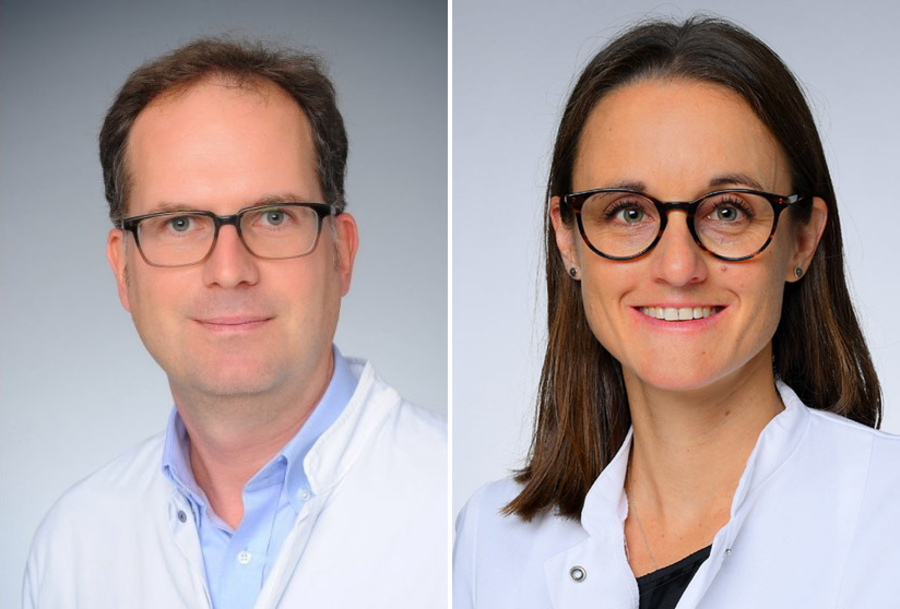
Prof. Dr. Matthias Fischer and PD Dr. Carolina Rosswog
A new study from the Experimental Pediatric Oncology team at the University Hospital Cologne demonstrates that molecular classification of neuroblastoma based on telomere maintenance mechanisms can improve current risk classification in children with neuroblastoma. The study, entitled “Prognostic Impact of Telomere Maintenance Mechanisms in Neuroblastoma,” has been published in the Journal of Clinical Oncology.
Disease courses of neuroblastoma range from spontaneous regression to highly aggressive and fatal disease despite intensive therapies. Accurate prediction of the individual course of disease is therefore essential for treatment decision making. This is particularly relevant for the large group of patients currently classified as non-high-risk, in whom both undertreatment of biologically aggressive tumors and overtreatment of patients with favorable disease remain important clinical challenges. A precise understanding of tumor biology could help to better distinguish these patient groups and allow for individualized treatment decisions.
The study, led by PD Dr. Carolina Rosswog and Prof. Dr. Matthias Fischer, investigated the prognostic accuracy of telomere maintenance mechanisms for risk classification in children with neuroblastoma in comparison to current standard-of-care. Telomere maintenance mechanisms enable infinite proliferation capacity in tumor cells and have been reported as a key biological feature of high-risk neuroblastoma. This study demonstrates that telomere maintenance-based classification precisely discriminates patients with favorable and unfavorable outcome within non-high-risk patients and outperforms all current standard-of-care prognostic markers and risk classifications. The study, thus, illustrates how a deeper understanding of tumor biology can be translated into strategies for improved clinical management. Based on these findings, a national trial is currently being established in which treatment intensities for children with neuroblastoma will be tailored according to the presence or absence of telomere maintenance mechanisms in their tumors, with the goal to improve patient outcome while reducing unnecessary treatment-related toxicity and long-term sequelae.


